

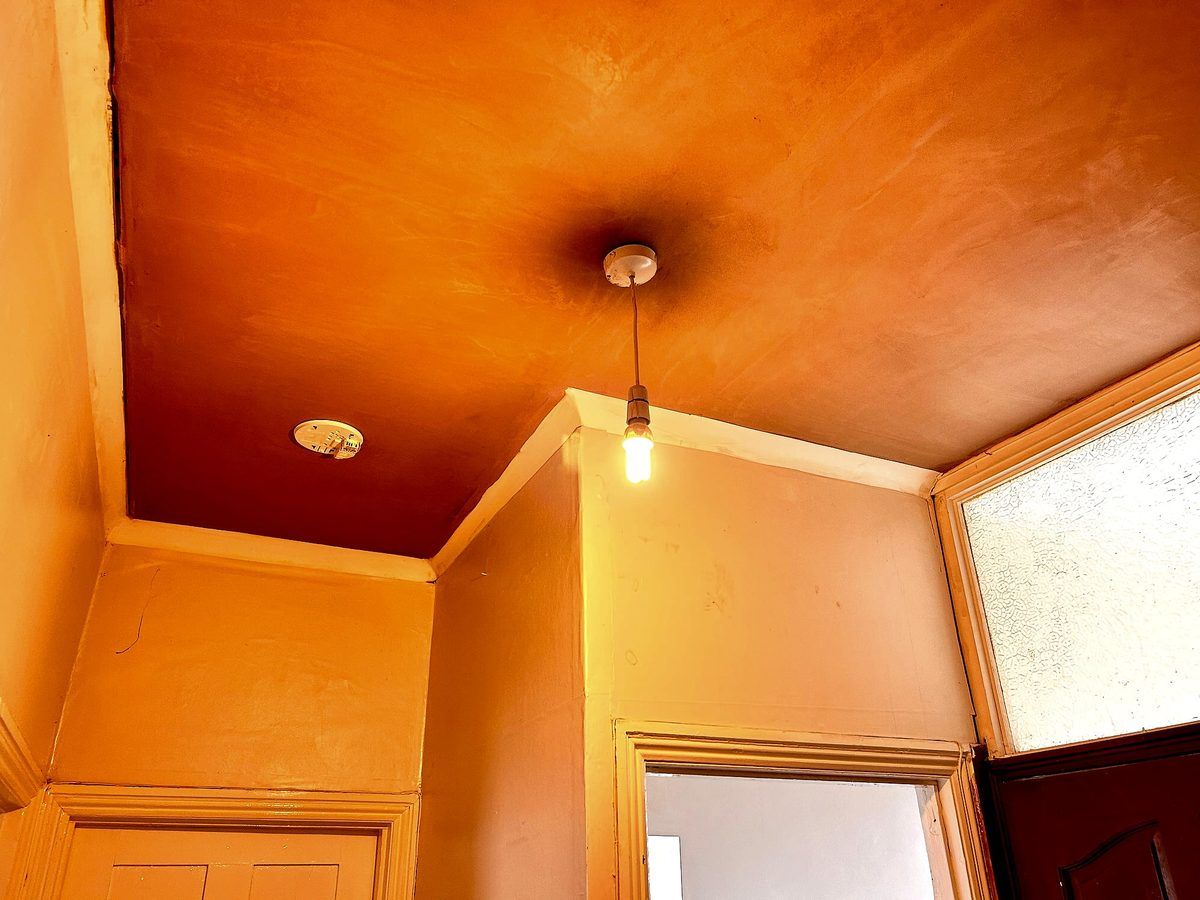
Plaster Repairs
Serving Broadstairs, Ramsgate, Margate, Canterbury, Dover and surrounding areas
Not every plastering job needs a full replaster. From cracks and holes to blown patches and water damage, our repair service targets problem areas and restores your walls and ceilings to a smooth, solid finish without the disruption or cost of starting from scratch.
When Plaster Repairs Make Sense
A full replaster is not always necessary. If your walls and ceilings are generally sound with localised areas of damage, targeted repairs are a practical, cost-effective solution. We regularly carry out plaster repairs across East Kent for homeowners dealing with:
- Cracks from building settlement, thermal movement or minor structural shifts
- Blown plaster where the surface has detached from the wall behind it
- Impact damage from accidents, furniture moves or building work
- Water damage from leaks, condensation or historic damp
- Holes left by removed fittings, electrical work or plumbing alterations
- Patch repairs after rewiring, new sockets or pipework alterations
Lee on the repairs he gets called out to most
Water damage is the big one. Burst pipes, leaking radiators, leaks from the bathroom upstairs, that’s what brings most repair calls. The damage tends to be a stained, sagging or crumbled ceiling or wall. The first job is always to confirm the leak’s been fixed, because there’s no point me patching anything if water is still coming through. After that, I’ll look at the size of the damage and decide whether it’s a patch, or whether the ceiling or wall is gone and needs replacing wholesale. The other regular one is patching after other trades, after an electrician’s been in chasing cables or a plumber’s run new pipework.
Types of Plaster Damage
Blown Plaster
This is one of the most common problems in East Kent homes, particularly those built between the 1930s and 1970s. Blown plaster is where the plaster has separated from the masonry behind it. You can identify it by tapping the wall - a hollow, drum-like sound means the plaster has detached. The area may also bulge slightly or feel soft under pressure.
Blown plaster happens over time as the mechanical bond between the plaster and the wall degrades. Moisture, vibration and thermal cycling all contribute. Small blown areas can be cut out and patched. Larger blown sections may point to a bigger problem that needs addressing.
Cracking
Not all cracks are the same:
- Hairline cracks in the surface coat are usually cosmetic and can be filled or skimmed over
- Map cracking (a network of fine cracks) often indicates the plaster dried too quickly or was applied too thickly
- Straight cracks along joints typically appear at plasterboard edges where scrim tape was not used or has failed
- Diagonal or stepped cracks may indicate structural movement and should be assessed before repair
We assess the type and cause of cracking before recommending a repair approach. There is no point filling a crack that is going to reopen because the underlying cause has not been addressed.
Lee on structural cracks
I’m not a structural engineer, so I’ll always be honest with a customer if a crack looks like it’s coming from movement in the building rather than the plaster itself. Diagonal cracks, stepped cracks that follow the bricks, anything that runs across both sides of a corner, those need a structural engineer to take a look before I touch them. If I just fill the crack and don’t address the cause, it’ll reopen, the customer wastes their money, and I look like I’ve done a bad job. I’d rather lose the work and recommend the right specialist than do the wrong job.
Water Damage
Leaking pipes, roof leaks and condensation can all cause plaster damage. The plaster may become soft, stained, or start to crumble. In some cases, water-damaged plaster can dry out and be refinished. In others, particularly where the plaster has been saturated for an extended period, it needs cutting out and replacing.
The critical rule with water damage is: fix the source first. We will not plaster over a damp problem. If there is an active leak or ongoing damp issue, that must be resolved before any plastering work takes place.
Lath and Plaster Deterioration
Many older properties in Canterbury, Deal, Sandwich and across East Kent have original lath and plaster walls and ceilings. Over time, the lime plaster that was pushed through the gaps in the timber laths (forming the “nibs” that hold the plaster in place) can break away, causing the plaster to sag or detach. We can repair localised failures in lath and plaster, preserving the original fabric of the building where possible.
Lee on lath and plaster
I’ll take on lath and plaster repairs where the laths are sound and the failure is localised. On listed buildings or anywhere the original fabric matters, I’ll use lime for the repair, because cement or modern gypsum traps moisture and damages the original work over time. On a regular older property where matching the original isn’t critical, I might use a bonding coat and Multi-Finish for the patch. Where the laths themselves have gone rotten or the failure is widespread, my honest recommendation is usually to take the whole ceiling down and put plasterboard up instead. It’s more work but it’s the right answer for the next fifty years.
Our Repair Process
Assessment
We start by examining the damaged area and the surrounding plaster. We tap around the damage to check whether the problem is localised or more widespread. We also look for underlying causes - damp, structural movement, previous poor-quality work - and flag anything that needs addressing before we proceed.
Cutting Out
Damaged plaster is carefully removed back to the solid surrounding material. We cut clean edges using a bolster chisel or multi-tool, avoiding damage to the sound plaster around the repair area. For blown plaster, we remove everything back to the masonry background. For smaller holes and cracks, we rake out loose material and undercut the edges to give the new plaster something to grip.
Preparation
The exposed background is cleaned of dust and loose material. Depending on the surface, we may apply a PVA seal to control suction, or a bonding agent to ensure good adhesion. If the repair area spans a joint between different materials (for example, where masonry meets a timber lintel), we apply scrim tape to bridge the joint and prevent cracking.
Filling and Finishing
For deeper repairs, we build up with Thistle Bonding Coat or Thistle Hardwall, leaving the surface slightly below the surrounding plaster level. Once this has set, we apply a finishing coat of Thistle Multi-Finish, bringing the repair flush with the existing surface and trowelling to a smooth finish.
For shallow repairs and crack filling, a single application of Multi-Finish may be sufficient.
Blending
The goal is to make the repair invisible once decorated. We feather the edges of the new plaster into the surrounding surface and ensure the finished level is flush. After drying and a mist coat, the repair should be undetectable under paint.
Materials
- Thistle Bonding Coat - for building up deeper repairs on smooth or low-suction backgrounds
- Thistle Hardwall - for building up repairs on standard masonry
- Thistle Multi-Finish - finishing coat for all repair work
- Gyproc Scrim Tape - for stress points and joints
- Toupret or Gyproc filler - for very minor surface imperfections
- PVA and bonding agents - for preparation and adhesion
Lee on repair-job products
For repair work my preferred filler brand is Easy Fill. It’s easy to sand back, takes a good edge, and gives a clean blend with the surrounding plaster once it’s painted. For the actual replastering of larger patches I’ll use Multi-Finish over a bonding coat, same as I’d use on a bigger job. The mistake I see other plasterers make on repairs is rushing the prep, not cleaning the edges of the cut-out, not undercutting properly, and the new plaster ends up sitting proud or pulling away at the join. The repair only looks good if you’ve cut the hole properly first.
Repairs After Trades
One of the most common times plaster repair is needed is after other tradespeople have been in. Electricians chasing cables into walls, plumbers running new pipework, and kitchen or bathroom fitters all leave plaster damage that needs making good. We regularly work alongside other trades, coming in after the first fix to patch, fill and skim the disturbed areas.
If you are planning a larger project - a kitchen refit, bathroom renovation or rewire - it is worth factoring plaster repair into your budget from the start. We are happy to provide a quote based on the planned scope of work before it begins.
Lee on working with other trades
I work closely with electricians on site, especially on ceiling lowering jobs, partition walls and media walls where there’s wiring to coordinate. The usual rhythm on a renovation is: plumbers and electricians do their first fix, getting pipes and cables in place, then I come in and plaster everything back up, then they come back for their second fix to connect everything and put the sockets and outlets on. Good communication between trades is what makes the job run smoothly. I keep partnerships with regular builders in the area, and they bring me into their jobs the same way I bring them into mine.
When to Call a Professional
Small nail holes and hairline cracks can be filled with a good-quality filler and sanded smooth by a confident DIYer. But plaster repairs beyond that level are best left to a professional. Poor-quality patching is often worse than the original damage - uneven surfaces, visible edges and mismatched textures are hard to hide under paint and will bother you for years.
If you are unsure whether your plaster damage is a DIY job or a professional one, send us a photo and we will give you an honest answer.
Frequently Asked Questions
How do I know if my plaster needs repairing or fully replacing?
Can you match the repair to the existing wall finish?
What causes plaster to crack?
How much does a small plaster repair cost?
Can you repair plaster damaged by a leak?
Is it worth repairing old lath and plaster?
Do plaster repairs create a lot of dust?
Ready to Get Started?
Contact us today for a free, no-obligation quote on your plaster repairs project. We serve all areas across East Kent.
What Customers Say About Our Plaster Repairs
5.0Fixing blown plaster in bedroom
We discovered some blown plaster while redecorating and needed it fixed asap. Lee went out of his way to get the job done quickly and professionally finished and for a fair price. I'd have no hesitation in recommending him and will be using his services in the future.
5.0Amazing repair job to a collapsed ceiling.
We had a leak from our bathroom and it made part of our hallway ceiling collapse. I searched for plasterers in the area and saw that Lee and Perfect Plastering had great reviews. He was friendly and prompt with coming round to have a look. The quote was extremely reasonable. He did an excellent job repairing the ceiling and by the time he left you wouldn't have known he'd been there. Super reliable and tidy. I'd definitely use him again and wouldn't hesitate to recommend him to friends and family.
5.0Removed old ceiling and and put new plasterboard up and then plastered ceiling and damaged walls
I wanted to write a review as I nearly didn't pick Lee due to 1 bad review but after seeing it was only 1 out of so many I thought I would give him the benefit of the doubt ! I am so glad I did because the workmanship was outstanding! The finish of the plastering is superb. Lee was easy to contact throughout my decision making and sent a prompt quote shortly after. As people may know getting hold of builders these days is hard work! But Lee was great. Not only was his workmanship superb but so was his cleanliness. I will use Lee again as I have some more work planned in the summer.