

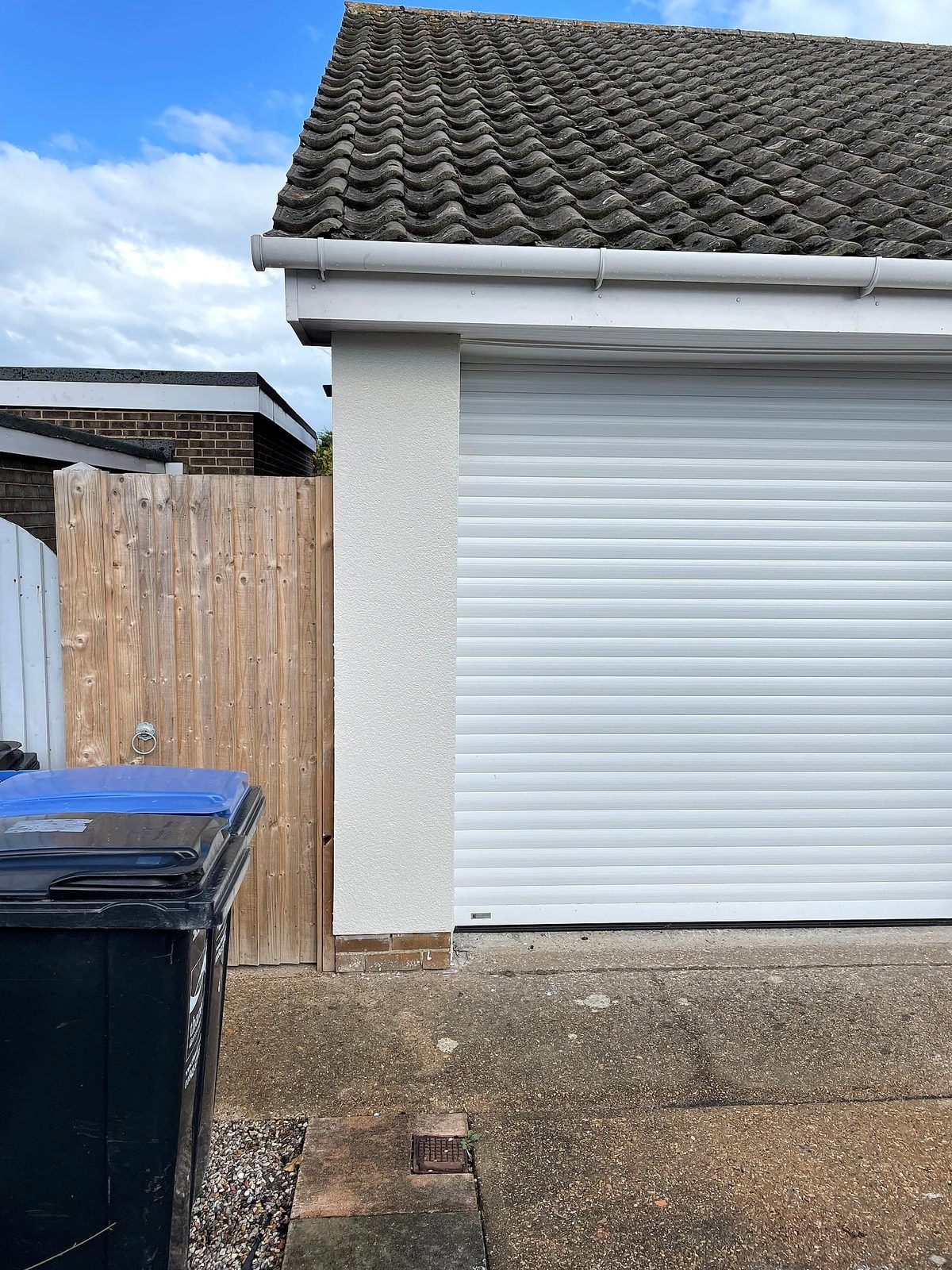
Monocouche Render
Serving Broadstairs, Ramsgate, Margate, Canterbury, Dover and surrounding areas
Monocouche render is a factory-made, through-coloured render applied in a single coat directly onto prepared masonry. It eliminates the need for painting, provides a weather-resistant finish from day one, and comes in a wide range of colours and textures. We are experienced applicators of monocouche render systems across East Kent.
What Is Monocouche Render?
Monocouche render is a factory-produced, pre-mixed rendering product that is applied in a single coat to exterior masonry walls. Unlike traditional sand and cement render, which is mixed on site and requires multiple coats plus painting, monocouche arrives as a dry powder in bags, is mixed with water on site, and produces a finished, through-coloured surface in one application.
The product was developed in France (hence the French name) and has been widely used across Europe for decades. It has been available in the UK for over 20 years and has become a popular choice for new builds, renovations and re-renders across East Kent and the wider South East.
Lee on monocouche vs traditional render
About 70% of my exterior work is modern render systems now, and monocouche makes up a big slice of that. Ten years ago the split was the other way round. The shift has come because the modern products have got significantly better, especially on waterproofing, and customers like the idea of not having to repaint every few years. Traditional sand and cement still has its place, but if a customer wants a coloured render and minimum maintenance, monocouche or silicone is what I’ll recommend.
Why Choose Monocouche?
No Painting Required
The most significant advantage of monocouche over traditional render is the elimination of painting. The colour pigment is mixed into the render at the factory, so the colour runs all the way through the material. There is no paint layer to fade, peel, flake or need renewing. Over the lifetime of a property, the saving on repainting costs (typically £1,500-3,000 per repaint for an average house) makes monocouche highly cost-effective despite the higher initial outlay.
Consistent Factory Quality
Because monocouche is factory-mixed, the proportions of cement, aggregate, pigment and additives are precisely controlled. This removes the variability that comes with site-mixed traditional render, where the mix ratio, sand quality and water content can vary from batch to batch. The result is a more consistent, reliable product.
Speed of Application
A single-coat system is faster to apply than a two or three-coat traditional render. For homeowners, this means less disruption, less scaffolding time, and a finished result sooner. For a typical semi-detached house in East Kent, monocouche can save one to two days compared with traditional rendering.
Good Weather Resistance
Monocouche is formulated to withstand the UK climate, including the driving rain and coastal exposure common across East Kent. Its cement-based composition provides good resistance to water penetration while remaining breathable enough to allow moisture vapour to escape from the wall behind.
Lee on what wins customers over
The main selling point I give customers is that it saves on painting. Once it’s on, it’s on. You’re not paying for paint, you’re not paying for scaffolding to come back in five years, and you’re not looking at flaking paint when the colour starts to go. The other point is colour. Grey and white are the popular finishes at the moment, and people are choosing brighter, cleaner colours than they used to. With monocouche the colour stays true because it’s through-coloured, the pigment isn’t just on the surface.
Weber Monocouche: The Product We Use
We work primarily with the Weber Monocouche range, manufactured by Weber Saint-Gobain, one of the largest building materials companies in the world. Weber Monocouche is the UK market leader and the product we have the most experience with. It offers:
- Over 40 colours in the standard range, from classic white and cream to contemporary greys and darker tones
- Multiple texture options including scraped, floated and sponge finishes
- Proven track record with millions of square metres applied across the UK
- Full technical support including product datasheets, application guides and on-site assistance
- BBA certification confirming suitability for use as an external render in the UK climate
We also have experience with other monocouche products from Parex and Mapei, and can advise on the best product for your specific project if Weber is not the right fit.
Lee on brand choice
Weber is what I recommend for monocouche, every time. I’ve used K Rend monocouche on a bungalow once and the finish came out patchy, which put me off using it again unless a customer specifically asks. Weber is consistent, the colour range is good, and the system is well thought out. The other thing I’ll say strongly: use the manufacturer’s own mesh and beads. I had a job once where the client rejected the finish because the wrong brand of mesh had been used with Weber render. The product itself was fine, but using a different mesh voided the guarantee, so I had to redo the lot. Now I won’t mix and match systems, ever.
Application Process
1. Preparation
As with any render system, preparation is crucial. We:
- Remove all existing failing render back to sound masonry
- Clean the wall surface thoroughly, removing dust, moss and loose material
- Fix stainless steel beading to all external corners, window and door reveals, and stop edges
- Apply Weber HP12 base coat primer to control suction and improve adhesion where required
- Install alkali-resistant mesh over any cracks, movement joints or changes in substrate
2. Mixing
Weber Monocouche is mixed on site using a forced-action paddle mixer or a continuous mixer. The correct water-to-powder ratio is critical - too much water weakens the product and affects colour consistency; too little makes it unworkable. We follow Weber’s precise mixing instructions to ensure consistency across every batch.
3. Application
The render is applied by hand using a steel trowel, typically to a thickness of 15-20mm in a single pass. On larger areas, we work in manageable sections to ensure a consistent finish. The render is applied firmly to achieve full contact with the background and a uniform thickness across the wall.
4. Finishing
Once the render has firmed up sufficiently (usually 4-8 hours depending on temperature and conditions), the surface is finished to the chosen texture:
- Scraped finish - the most common choice. The surface is scraped with a plastic or stainless steel scraper to remove the outer skin and reveal the aggregate, producing a fine, even texture
- Sponge float finish - the surface is worked with a damp sponge float to produce a slightly smoother, finer texture
- Smooth finish - for a cleaner, more contemporary look, though this requires particular skill to avoid trowel marks and inconsistencies
The timing of this finishing stage is critical. Too early and the render pulls away; too late and it has set too hard to work. Experience is essential in reading the conditions and judging the right moment.
Lee on his preferred finish
The silicon finish is what I go for, on both Weber Monocouche and K Rend. It gives you a more sealed, less porous surface because it’s rubbed and flattened with the trowel rather than scraped. Scraped finishes look fine when they’re new but they’re more open to dirt and algae over the years. The silicon finish stays cleaner. Grey and white are what customers are choosing most at the moment, and the silicon finish suits those colours, it shows the colour off properly and it ages well.
Monocouche on East Kent Properties
Monocouche render is suitable for a wide range of property types common across East Kent:
- 1930s-1970s houses where existing painted render is failing and a maintenance-free replacement is wanted
- New extensions built with blockwork that needs an exterior finish to match or complement the existing house
- Coastal properties in Deal, Dover, Ramsgate and Margate where weather resistance and low maintenance are particularly valuable
- Bungalows common throughout Herne Bay, Whitstable and the Thanet area, where the entire wall surface is visible and render appearance really matters
- New builds where developers and self-builders want a clean, modern finish without ongoing painting
One important consideration for period properties: monocouche is a cement-based product and is not suitable for older buildings that require a breathable, lime-based render. For listed buildings, conservation areas or pre-1919 solid-walled properties in and around Canterbury, we would typically recommend lime render instead.
Costs and Value
Monocouche render typically costs from £45 per square metre applied, compared with around £30 per square metre for traditional sand and cement render. However, when you factor in the cost of painting (both the initial paint job and repainting every 5-7 years), monocouche works out more economical over the lifetime of the property.
For a typical three-bedroom semi-detached house in East Kent, a full monocouche re-render might cost £5,000-8,000 depending on the area to be covered, the condition of the existing walls, and access requirements. We provide detailed, itemised quotations after a site visit.
Lee on what a typical job looks like
Most of my monocouche calls are full whole-house re-renders, not extensions or patches. By the time someone’s decided to switch from painted render to monocouche, they’re usually doing the whole house at once so the colour matches and they’re done with painting for good. A full house takes two to three weeks including hacking off the old render and scaffolding time. Pricing depends a lot on the size of the property and whether the old render comes off easily or needs to be chiselled off in tight patches. I’ll always quote on a per-job basis after I’ve seen the property and the condition of the existing walls.
Getting a Quote
We offer free site visits and quotations for monocouche rendering across East Kent. We assess your walls, discuss colour and texture options, and can apply sample panels on site so you can see exactly what the finished result will look like. We cover Canterbury, Whitstable, Herne Bay, Faversham, Dover, Deal, Sandwich, Ramsgate, Broadstairs, Margate and all surrounding areas.
Frequently Asked Questions
What does monocouche mean?
Does monocouche render need painting?
How long does monocouche render last?
Can monocouche be applied over existing render?
What colours and textures are available?
Is monocouche render breathable?
What is the difference between monocouche and K Rend?
Can monocouche be repaired if it gets damaged?
Ready to Get Started?
Contact us today for a free, no-obligation quote on your monocouche render project. We serve all areas across East Kent.
What Customers Say About Our Monocouche Render
5.0Lee has been helping me transform my bungalow over the last couple of years. I've been very happy with his work and his rates. A jolly decent chap as well ! Thanks Lee.
5.0Lee is friendly, knowledgeable, reliable, affordable - and an excellent plasterer! We are very happy with his work and will definitely use him again. Thoroughly recommended.
5.0Positive: Responsiveness, Punctuality, Quality, Professionalism, Value