

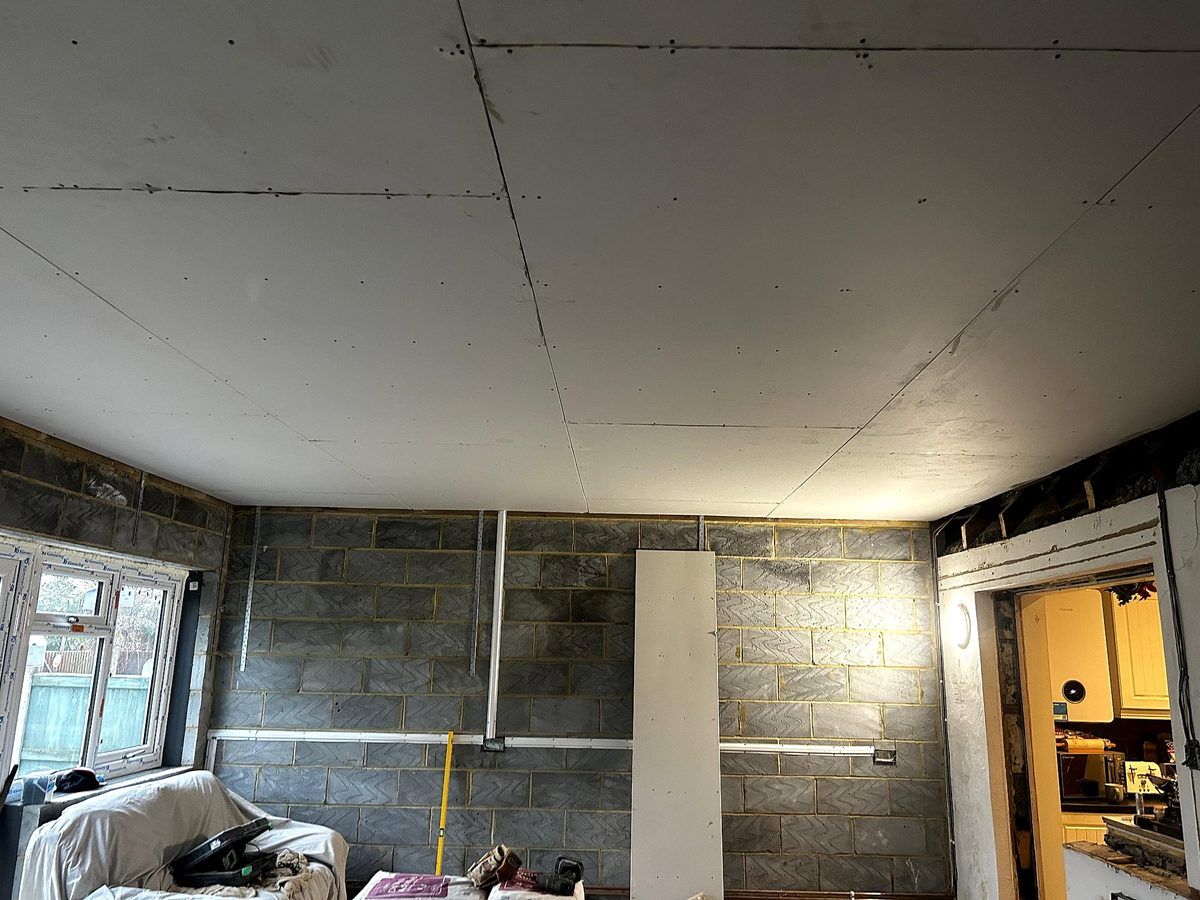
Lowering Ceilings
Serving Broadstairs, Ramsgate, Margate, Canterbury, Dover and surrounding areas
High ceilings are a desirable feature in many homes, but sometimes they cause practical problems - rooms that are hard to heat, exposed pipework or cables overhead, or simply a space that feels too cavernous. Our ceiling lowering service creates a new, lower ceiling at the height you want, with a smooth, finished surface ready for decoration.
When Lowering a Ceiling Makes Sense
Not every room benefits from a high ceiling. While period features and generous proportions are appealing, there are practical situations where a lower ceiling is the better option:
Energy Efficiency
Many older East Kent homes, particularly Victorian and Edwardian properties, have ceiling heights of 2.7 to 3.3 metres. That extra volume of air needs heating, and heat rises - so you end up paying to warm air that sits above head height doing nothing useful. Lowering the ceiling to a standard 2.4 metres, combined with insulation in the void above, can make a noticeable difference to how quickly a room warms up and how long it stays warm.
Concealing Services
When renovation work introduces new services - plumbing for an upstairs bathroom, heating pipes, ventilation ducting, electrical cables, or structural steels - these sometimes run below the existing ceiling level. Rather than leaving them exposed, a dropped ceiling conceals everything neatly.
Recessed Lighting
Modern lighting design often uses recessed LED downlights, which need a void above the ceiling to sit in. If your existing ceiling is plaster directly on joists with no accessible void, lowering the ceiling creates the space needed for recessed lighting.
Room Proportions
Sometimes a room just feels wrong - too tall and narrow, or with a ceiling height that is out of proportion with the room size. A kitchen-diner in an old school conversion, for instance, might have 3.5-metre ceilings that make the space feel cold and echoey. Bringing the ceiling down creates a more intimate, comfortable room.
Lee on why customers lower ceilings
The two main reasons are covering up what’s overhead, or levelling out a ceiling that isn’t flat. If a customer’s got exposed pipework, ducting or beams they don’t want to look at, a dropped ceiling is the cleanest fix. Or if the existing ceiling has dipped over the years and isn’t level any more, building a new one underneath is sometimes the easier option than trying to patch and skim back to flat. Energy efficiency comes up too, especially in old Victorian rooms with very high ceilings, but it’s usually a secondary benefit rather than the main reason.
Our Process
1. Planning and Design
We discuss the desired ceiling height, what services need to be accommodated in the void, whether insulation is wanted, and what the lighting plan is. We measure the room and plan the framework layout, including the positions of any hatches or access panels needed.
2. Framework Installation
We construct a suspended framework using metal ceiling channel (MF ceiling system) or timber battens, depending on the project requirements:
MF Ceiling System: This uses galvanised metal channels suspended from the existing ceiling joists on adjustable hangers. It is the professional standard for suspended ceilings, offering precise levelling, minimal thermal bridging and a rigid, stable framework. We use British Gypsum MF Ceiling Section, Primary Channel and Strap Hangers or Direct Fixing Brackets as appropriate.
Timber Framework: For smaller drops or simpler installations, a timber framework may be used, with treated softwood battens suspended from the existing joists. This is a cost-effective option for straightforward ceiling lowering.
The framework is levelled precisely using a laser level to ensure the new ceiling is perfectly flat and at the correct height throughout.
3. Services Installation
Before boarding, any services that will run in the void are installed:
- Electrician fits wiring for recessed lights, smoke detectors and any other ceiling-mounted services
- Any plumbing or ductwork is routed through the void
- Insulation is laid above where the new ceiling will be
This is the stage where coordination with other trades is essential. We schedule the work so that services are in place before we close up the ceiling with plasterboard.
Lee on working with electricians
I work closely with electricians on every ceiling lowering job. They need to position cables, back boxes and downlights before I board over, so the rhythm is: I build the framework and get one face ready, the sparky comes in and runs everything through the void, then I close it up with plasterboard and skim. After skimming, the sparky comes back to fit the actual light fittings. I’ve built up regular partnerships with local electricians over the years, so scheduling is easy, I know their availability, they know mine, and we don’t end up standing around waiting for each other.
4. Plasterboard Fixing
Gyproc WallBoard (12.5mm or 15mm, depending on fire rating requirements) is fixed to the framework. Boards are screwed at regular intervals, joints are staggered, and all edges are supported by the framework. We cut precise openings for recessed lights and other penetrations.
In situations where fire resistance is required (such as in flats or properties with rooms above), we use Gyproc FireLine board and ensure all penetrations are fire-stopped appropriately.
5. Taping and Skimming
All joints are taped with Gyproc scrim tape, external corners and edges receive metal angle bead, and the entire ceiling is skimmed with Thistle Board Finish to create a seamless, smooth surface.
6. Finishing
The finished ceiling is indistinguishable from any other plastered ceiling. Once dry (2-4 weeks), it is ready for a mist coat and then full decoration. If recessed lights are fitted, the electrician returns after plastering to install the light fittings.
Insulation in the Void
The void above a lowered ceiling is an excellent opportunity to add insulation, particularly if the room is below a cold loft space or an uninsulated roof. We can lay mineral wool insulation (Rockwool or Knauf Loft Roll) above the new ceiling to improve thermal performance.
Acoustic insulation is also worth considering if the lowered ceiling is below a bedroom or other occupied room. Mineral wool between the old and new ceilings significantly reduces sound transfer.
Lee on insulation in the void
If we’re putting a new ceiling in below an old one, it makes sense to stick some insulation in the void at the same time. Rockwool for loft-style applications and acoustic value. Kingspan or Celotex if you’re trying to maximise thermal performance in a shallow space. It’s a small additional cost on the job but it gives the customer a noticeable improvement to how the room feels, especially in older properties where the existing roof insulation is poor.
Building Regulations Considerations
Most domestic ceiling lowering work is straightforward and does not require Building Regulations approval. However, there are situations where regulations may apply:
- Fire compartmentation: In flats, HMOs and some converted properties, ceilings may form part of the fire compartmentation. Any alteration must maintain the required fire resistance.
- Minimum heights: Habitable rooms must maintain minimum ceiling heights. The Building Regulations guidance suggests 2.1m as a minimum, though most people find anything below 2.3m uncomfortable.
- Electrical work: Any new electrical installations (such as recessed lighting) must comply with Part P of the Building Regulations and should be carried out or certified by a qualified electrician.
- Structural: If the existing ceiling is load-bearing or if you are making structural alterations to support the new ceiling, professional structural advice may be needed.
We assess each project individually and advise if any Building Regulations considerations apply.
Common Projects in East Kent
Victorian Terrace Parlours
The high-ceilinged front rooms of Victorian terraces in Deal, Dover and Canterbury often have 3-metre ceilings. Lowering these to 2.4m with insulation above makes them significantly warmer and cheaper to heat, while recessed lighting updates the room’s look.
Garage Conversions
When a garage is converted to a habitable room, the ceiling often needs installing from scratch. We build a new ceiling at the appropriate height with insulation above, giving the room the same feel as any other room in the house.
Commercial to Residential Conversions
Former shops, pubs and other commercial properties being converted to homes often have very high ceilings. Lowering them is essential for creating comfortable living spaces and meeting energy efficiency requirements.
Lee on the unusual ones
Most ceiling lowering work is bog-standard, a customer wants a flat 2.4 metre ceiling in a high-ceilinged room. But you do find things. I once pulled an old ceiling down on a job and found a gun stashed up there, and on another one a vibrator. You never know what you’ll find above someone’s plaster. The other interesting jobs are the bigger conversions, old shops or pubs turned into flats, where the original commercial ceiling is way too high and you’re effectively building a whole new ceiling at residential height to make the space liveable.
Frequently Asked Questions
Why would I want to lower my ceiling?
How much can a lower ceiling save on heating?
What is the minimum ceiling height allowed?
Can I have recessed downlights in a lowered ceiling?
Does lowering a ceiling need Building Regulations approval?
What happens to the space above the new ceiling?
How long does it take to lower a ceiling?
Ready to Get Started?
Contact us today for a free, no-obligation quote on your lowering ceilings project. We serve all areas across East Kent.
What Customers Say About Our Lowering Ceilings
5.0Lee has been helping me transform my bungalow over the last couple of years. I've been very happy with his work and his rates. A jolly decent chap as well ! Thanks Lee.
5.0Lee is friendly, knowledgeable, reliable, affordable - and an excellent plasterer! We are very happy with his work and will definitely use him again. Thoroughly recommended.
5.0Positive: Responsiveness, Punctuality, Quality, Professionalism, Value